Swirls in the Queue: A Driver’s Field Guide to Risky Hand Car Washes
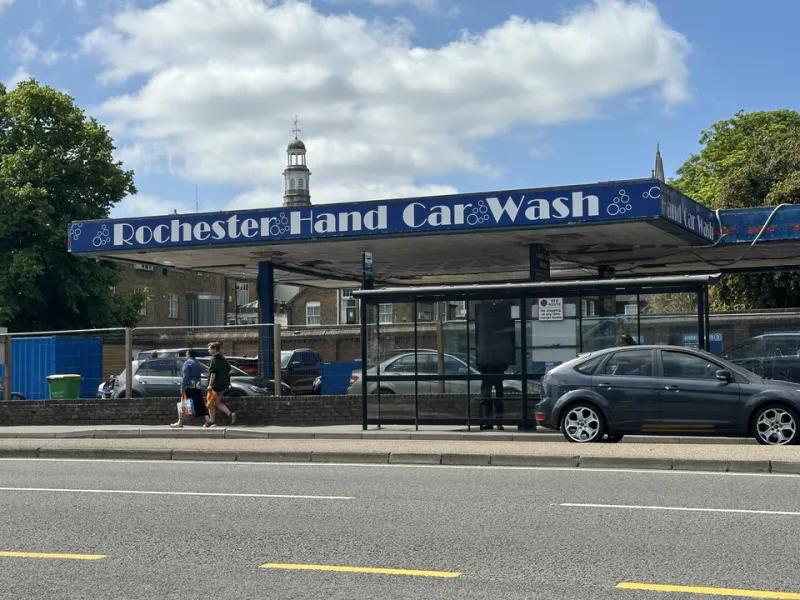
Photo: Sunolafjagtenben-hur, CC0, via Wikimedia Commons
Cheap hand car washes are a British institution. You queue on a retail park, hand over a tenner, and ten minutes later the car looks brighter. For plenty of drivers, that is the whole point. But there is a difference between a wash that removes dirt and a wash that removes a little bit of your clear coat every time.
This is not a campaign against every hand car wash. Some are careful, well-run and use sensible methods. The trouble is that the good ones and the risky ones can look almost identical from the driver’s seat. You need to audit the process, not the price board.
The £10 maths
A cheap wash is only cheap if it does not create work later. Swirl marks, marring, etched water spots and dull trim are not always obvious under forecourt lighting. They show up later—on a sunny day, under a petrol station canopy, or when you try to sell the car.
Correcting swirls properly means machine polishing. That is time, product and skill. A full correction can easily run into hundreds of pounds, which is why the old line about a ten-pound wash costing three hundred pounds to fix is not much of an exaggeration. You are not paying for a wash. You are borrowing against the paint.
What a bad wash actually installs
The most common issue is contact washing with dirty media. A sponge or mitt that has already cleaned the lower panels, wheels or the previous car can drag grit across the paint. That leaves fine circular scratches—swirls—that dull the finish in direct light.
Then there is the chemistry. Strong traffic film removers and acidic wheel cleaners can do a job quickly, but they can also stain trim, etch sensitive finishes and leave residues if they dry on the panel. Aggressive pre-soaks used in the wrong dilution are not a shortcut; they are a risk.
Tunnel washes bring their own issues. Brushes hold dirt, and the car in front of you may have been muddy. Even brushless tunnels rely on strong chemicals and high-pressure blasts. Some cars come out fine; others come out with marring and a fresh set of water spots.
The roadside audit: watch before you pay
You can learn a lot by standing back for two minutes before handing over the keys.
Look at the wash buckets. Are there two buckets—one for shampoo, one for rinsing the mitt—or is there one bucket of grey soup? Are wheels being cleaned with separate tools, or is the same sponge going from sill to bonnet? Is the car pre-rinsed before anyone touches it with a mitt? Is the wash media actually clean?
Watch the drying stage. A clean microfibre towel or plush drying towel is a good sign. A dirty chamois, a squeegee dragged across dry paint or a single cloth used on wheels and bodywork is not. Watch how they treat badges, grilles and panel gaps; if they are blasting a pressure washer directly into trim and seals at close range, that is a warning.
Check the water. If the bucket water is black before your car has even been washed, the media is carrying grit. If the forecourt is busy and nobody is changing water, be cautious.
Finally, look at the finish of the car in front. If it is covered in fresh swirls or the trim is smeared with dressing, you have your answer.
Red flags that should stop you
A few practices are worth walking away from. The same sponge being used on wheels and paint is top of the list. Dry wiping a dusty car before rinsing is another. So is spraying a strong chemical onto a hot panel in direct sun and letting it dry.
Be wary of any wash that promises to remove scratches for a few pounds. Real correction takes time. A quick polish by hand over a dirty panel is more likely to add marks than remove them.
Also avoid letting anyone apply a cheap “hot wax” or tyre dressing over contaminated paint. It can look glossy for an hour, but it traps dirt and makes the next proper clean harder.
Chemicals and media to avoid
You do not need to be a chemist to spot the risky stuff. Avoid strong acid wheel cleaners on sensitive finishes, caustic pre-soaks left to dwell too long, and any product used at a strength that makes your eyes water. Avoid brushes with stiff bristles on paint, dirty sponges, and drying towels that have been dropped on the floor.
If you use a public jet wash, keep the lance moving and at a sensible distance. Do not use the forecourt brush on paint—especially not on the bonnet or roof. Bring your own safe wash media if you can, and use the jet wash for rinsing rather than contact cleaning.
A safer hose-free quick clean
For street-parked drivers, the safest quick clean is usually a rinseless wash. You pre-spray the panel with a rinseless wash solution, then wipe gently with a clean microfibre towel, folding it to a fresh face as you go. Use several towels for a dirty car and keep a separate one for wheels. It is not a replacement for a proper decontamination wash, but it is far kinder than a dirty sponge.
Waterless wash products can work on lightly dusty cars, but they are not for a salt-covered winter car or a mud-splattered bumper. If the car is genuinely dirty, use a jet wash first to remove the worst of it, then finish with a rinseless wash at home or in a quiet corner of a car park.
If you still use a hand wash
Ask what they use on wheels and paint. Watch whether they rinse before contact. Pay attention to the drying towels. If the answer is vague or the process looks rushed, go elsewhere. A good wash does not have to be expensive, but it does have to be careful.
The £10 wash is not automatically a bad deal. It is a bad deal when the process is careless. Audit the queue, the buckets and the towels—and remember that the cheapest clean is the one that does not need correcting later.