The Ledge Beside the Glass: A Five-Minute November Reset for Mirror-Base Paint

Photo by Photo by Erik Mclean on Unsplash on Unsplash
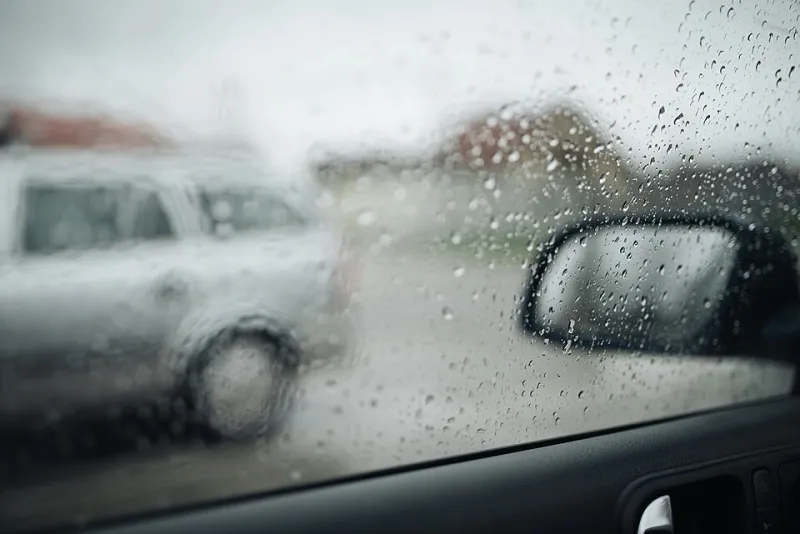
There is a small shelf on almost every car that does nothing useful except collect trouble. It sits at the base of the door mirror, where the mirror housing meets the door skin. You can see it when you open the door. You almost certainly ignore it when you wash the car. And in November, with wet leaves plastered to every kerb and the first gritters already out on the A-roads, it becomes one of the more quietly important paint edges on the whole vehicle.
The bit nobody photographs
Door mirrors are designed to fold, adjust and survive a knock. That means the base—sometimes called the sail or the mirror footing—does not sit flush against the door in the way a badge or a door handle does. There is usually a gasket, a narrow gap, and a small horizontal ledge where the two meet. On some cars it is a shallow tray. On others it is a thin shadow line that you only notice under a low sun.
That ledge catches everything the road throws at it: fine grit, brake dust, bits of hedge, leaf fragments, and the brown tannin that leaches out of wet oak and beech leaves. Add November rain and the occasional frost, and you have a patch of paint that stays damp for longer than almost anywhere else on the car. The mirror glass gets wiped. The door gets washed. The base gets a quick pass with a sponge, if it is lucky, and then a jet of water pushes the grit further into the gap.
Why a tiny edge can turn expensive
Paint is thinnest at edges and around panel gaps. That is not a conspiracy; it is how cars are coated. The mirror base is also a natural stone-chip target because it faces forward and sits at roughly the height of gravel thrown up by vans and lorries. A small chip there is easy to miss. Left alone through a UK winter, it can turn into a raised blister or a brown stain that spreads under the paint.
This is not a reason to panic. Most modern cars are well protected, and a clean, intact edge will shrug off far more than people think. But the mirror base combines three things that paint does not love: a thin edge, a place where water lingers, and a supply of salt-laden road film. If there is already a chip, the salt has somewhere to work. The point of a November clean is to find that out before the worst of the weather arrives.
Inspect with light, not a scraper
Start by parking somewhere with decent light—ideally low winter sun or a bright LED torch. Kneel down and look along the door skin towards the mirror base, rather than staring at it from above. The angled view shows up chips, staining and any bubbling far better than a straight-on glance.
Check the gasket as well. Is it sitting flat? Has it split or gone hard? Is there a gap that is clearly holding water? Do not lever the mirror housing or poke at the gasket with a screwdriver. Trim clips are tough but not indestructible, and a cracked gasket is a much bigger job than a dirty one. A phone camera with the flash on can be useful for getting a look at the underside of the ledge without putting your face against the paint.
Flush out, don't blast in
This is the part where enthusiasm does damage. A pressure washer aimed at the mirror base will force grit into the gap between the housing and the door, and from there it can work its way into drainage channels or sit against the paint for weeks. You want to move debris away from the car, not deeper into it.
Use a low-flow hose, a watering can, or a squeeze bottle. Wet the area first, then apply a mild all-purpose cleaner at a sensible dilution. Agitate gently with a soft detailing brush—one of the small ones sold for badges and grilles is ideal. Work from the top of the ledge downwards and outwards, letting gravity carry the debris away from the door cavity. Flush with clean water and catch the runoff with a microfibre towel so it does not run down the door and leave streaks.
If the gap is packed with leaf fragments, use plastic tweezers or a soft brush to lift them out. Do not use a jet of water to chase them through. The goal is a clean shelf, not a clean door cavity.
Dry it like you mean it
Once the grit is gone, dry the area properly. Fold a plush microfibre into a point and draw it along the ledge and around the gasket. If you have a filtered air blower, use it to push trapped water out of the gap—but keep the pressure low and direct it away from the door. Leave the area to air for a few minutes before you apply any protection. Trapping water under a wax or sealant is worse than leaving the paint bare for another day.
Deal with tannin and chips while you are there
Leaf tannin shows up as a brownish shadow that looks like dirt but does not shift with normal shampoo. A mild all-purpose cleaner or a dedicated bug-and-tar remover usually lifts it. If the staining has bonded, use a clay bar with plenty of lubricant and a light hand. Do not scrub hard at the edge; you can dull the paint or enlarge a chip.
If you find a chip, clean it with a little isopropyl alcohol and let it dry. Apply touch-up paint in thin layers rather than one fat blob, and build it up over a few sessions if needed. A blob will look worse than the chip and can trap moisture. If you can see rust bubbling under the paint, stop and get advice—that is beyond a five-minute driveway fix.
A barrier for the salt months
Once the area is clean and dry, apply a small amount of wax or paint sealant to the paint edge. Use a fine applicator and keep the product off the rubber gasket where possible; many dressings and waxes will stain or soften rubber over time. A thin, even layer is enough. Reapply every few weeks through the winter, especially after a wash or a spell of motorway driving.
This will not make the mirror base immune to stone chips, but it gives the paint edge a sacrificial layer and makes the next clean much easier. It also means that when you do find a chip, you are inspecting a clean surface rather than a muddy one.
The five-minute November habit
Make this part of your normal wash routine from now until spring. After the car is dried, spend five minutes on each side: look, flush, dry, protect. It is not glamorous, and nobody will notice it in a car park. But the mirror base is exactly the sort of place where a small amount of attention now saves a frustrating amount of correction later. Five minutes in November is a lot cheaper than a paint repair in February.